
Rabby Wallet Download: What a Multi-Chain Wallet Really Protects You From
Solana Wallets in Practice: How Phantom Compares with Other Choices
April 9, 2026Cold Storage and Trezor Desktop: What a Secure Download Actually Protects
May 2, 2026Rabby Wallet Download: What a Multi-Chain Wallet Really Protects You From
Is the safest wallet simply the one with the most warnings, or the one that helps you understand what a transaction will do before you sign it? For DeFi users in Germany and across the wider European market, that distinction matters. A wallet is not only a key container or a convenient browser button. It is also an interpretation layer between a person and smart-contract systems whose risks are often difficult to see.
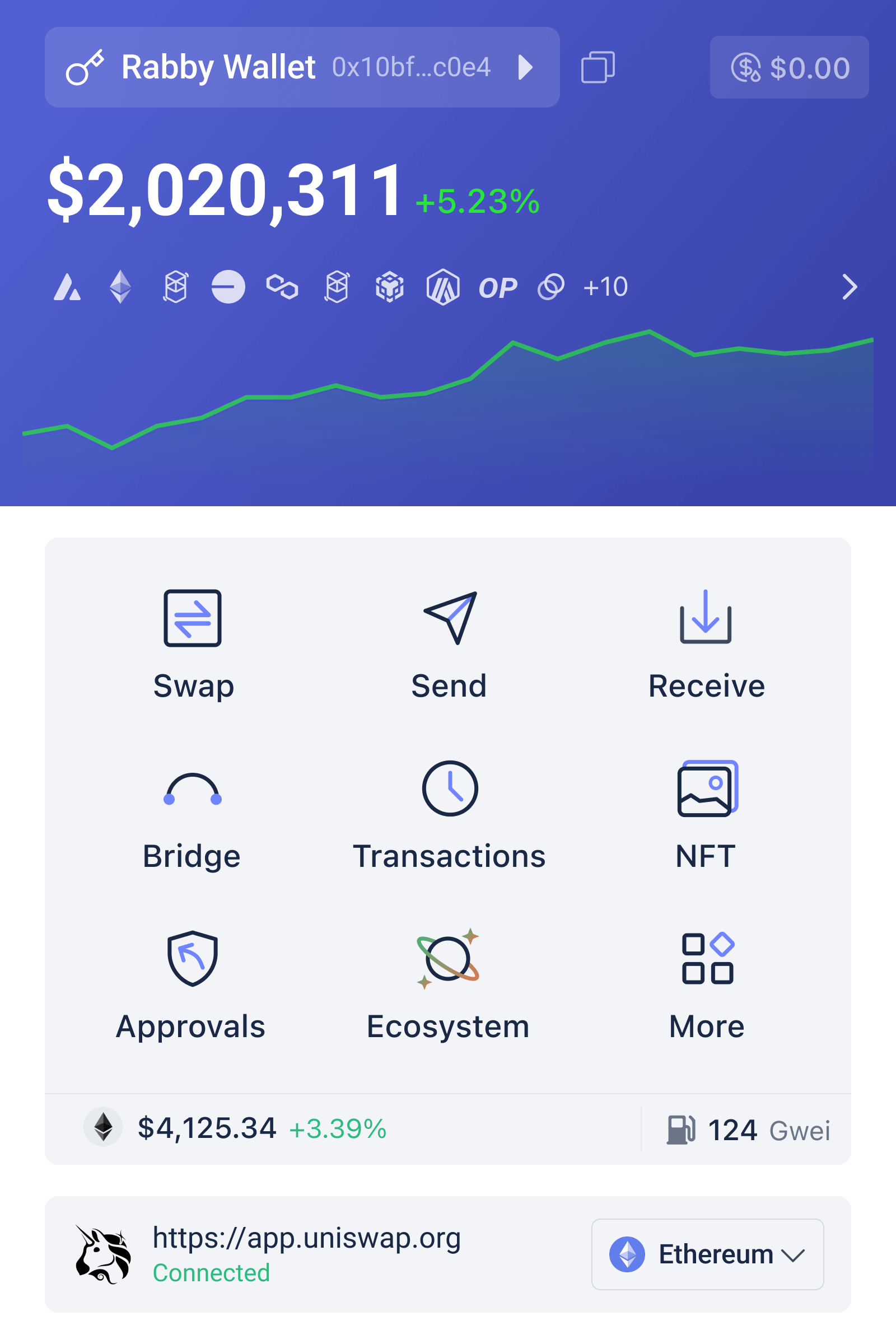
Rabby Wallet is built around that interpretation problem. Developed by DeBank as a non-custodial wallet for Ethereum and other EVM networks, it combines multi-chain access with transaction simulation, contract-risk checks, and hardware-wallet support. Its recent Chrome Web Store presentation again emphasizes an open-source browser wallet designed for Ethereum and EVM use. That positioning is useful, but it should not be confused with a guarantee of safety. Rabby can improve the information available before signing; it cannot make an unknown protocol trustworthy or recover funds sent to the wrong address.
Why transaction simulation changes the wallet model
Most users experience a blockchain transaction as a short technical request: connect, approve, sign. The important economic event, however, is not the signature itself. It is the state change that follows. Tokens may leave a wallet, an allowance may be granted, collateral may be locked, or a position may be created on a lending market.
Rabby’s transaction simulation is designed to expose the expected result before confirmation. Rather than relying only on a raw contract call or a long hexadecimal data field, the user can review anticipated changes to token balances and other transaction effects. This creates a more useful mental model: signing is not merely authorising a website; it is authorising a proposed state transition.
That is a meaningful security improvement because many attacks exploit a gap between what a user thinks they are approving and what the contract call actually requests. The wallet’s security engine also checks contracts and addresses for indicators associated with phishing, known exploits, or unlimited token approvals. Automatic network switching can reduce another common source of error: interacting with the right-looking application on the wrong chain.
There is a boundary condition, though. A simulation is an estimate based on the available chain state and the way a transaction is represented at that moment. It may not predict every outcome if market conditions change, a contract behaves differently under a later state, an oracle moves, or an external protocol introduces a dependency. A green warning panel should therefore be treated as evidence, not as an insurance policy.
Multi-chain convenience creates a larger decision surface
Rabby supports more than 140 EVM-compatible networks, including Ethereum, Polygon, Arbitrum, Optimism, Avalanche, Base, and BNB Chain. For a DeFi user who moves between mainnet, layer-2 networks, and application-specific environments, this removes much of the repetitive network configuration associated with a conventional wallet setup.
The benefit is operational consistency. The risk is that a single interface can make very different ecosystems feel deceptively similar. The signing process may look familiar on each chain, while finality assumptions, bridge risks, liquidity, fee markets, and contract maturity vary considerably. A wallet that makes switching effortless can reduce friction, but reduced friction can also reduce the moment in which a user asks, “Which chain am I actually using, and who controls the destination contract?”
This is especially relevant to bridges. Rabby integrates bridge routes such as LI.FI, allowing users to move assets across networks from within the wallet interface. Aggregation may help compare routes and simplify execution, but it does not remove bridge risk. A cross-chain transfer generally involves multiple contracts, messaging assumptions, liquidity providers, or intermediary mechanisms. The practical rule is simple: treat a bridge transaction as a separate risk category, not as an ordinary token transfer with a different fee.
Swaps, gas accounts, and the hidden trade-off of convenience
The integrated swap function scans decentralised exchanges such as Uniswap and 1inch to seek competitive rates and lower slippage. This can be useful when a user wants to stay inside one wallet interface rather than open several applications. Yet the best quoted exchange rate is not the same thing as the lowest total risk. Route complexity, approval requirements, price impact, contract exposure, and the possibility of a failed or partially executed path all deserve attention.
Rabby’s Gas Account feature addresses a familiar multi-chain problem: holding the native token required to pay fees on every network. With supported arrangements, users can pay gas across networks using stablecoins such as USDC. That is convenient for portfolio management, particularly when funds are distributed across several EVM chains. It also changes the user’s operational dependency. If the gas service, routing assumptions, or account conditions are unavailable, the apparent simplicity may disappear. Users should keep an emergency path for paying fees directly where practical.
Rabby Points, earned through activities such as swaps, gas top-ups, or referrals, add a loyalty layer. This is not a core security feature. Rewards can encourage experimentation or repeated use, but incentives may also encourage unnecessary transactions. For a risk-conscious user, points should remain subordinate to transaction purpose, expected return, and contract quality.
Non-custodial does not mean risk-free
Private keys are stored locally on the user’s device rather than transmitted to Rabby’s servers. This is the central non-custodial property: control remains with the wallet holder, not with a company that can reset access or approve withdrawals. Rabby also supports Ledger, Trezor, and OneKey, allowing the signing key to remain in a hardware device while the wallet provides the interface and transaction context.
The distinction between interface risk and key risk is important. Rabby can help identify suspicious approvals, but a user can still approve a legitimate-looking malicious contract. A compromised browser, unsafe extension installation, copied seed phrase, fake support message, or careless hardware-wallet confirmation can defeat otherwise strong design. Downloading the browser extension through an official distribution channel and checking the publisher and permissions is therefore part of wallet security, not administrative detail. Readers researching the rabby wallet extension should verify that they are using the genuine application before importing an account or connecting a hardware wallet.
Open-source code and the MIT licence improve inspectability and allow community review. They do not prove that every release is defect-free, nor do they eliminate supply-chain risk. Open source is best understood as a condition that makes scrutiny possible, not as evidence that scrutiny has found every problem.
A practical signing framework for DeFi users
A reusable review process is more valuable than memorising any wallet’s feature list. Before signing, ask four questions:
- Identity: Is this the correct application, contract, network, and recipient?
- Effect: What assets leave the wallet, and what assets or rights should return?
- Authority: Is the transaction a one-time action, or does it grant an allowance that may be used later?
- Failure: What happens if the route fails, the bridge is delayed, liquidity changes, or the protocol is exploited?
Rabby’s simulation and scanner are most useful when they support these questions rather than replace them. A sensible workflow is to use a separate low-value wallet for experimentation, limit token approvals where the application allows it, prefer hardware signing for meaningful balances, and record which chain holds each asset. German users should also remember that wallet safety and tax or regulatory record-keeping are different concerns: a safer signing flow does not automatically produce complete transaction records for reporting obligations.
What to watch as wallets become security interpreters
The broader direction is clear but not predetermined. If multi-chain systems continue to fragment liquidity and application access, wallets will increasingly compete on interpretation: clearer simulations, better allowance visibility, stronger phishing detection, and more reliable context around bridges and routes. The decisive question will be whether these tools remain understandable as protocols become more composable.
For now, Rabby’s strongest proposition is not that it removes DeFi risk. It is that it makes more of the risk visible before a signature is made. That is a narrower claim, but a more defensible one. The wallet is most valuable when the user treats it as a second set of eyes rather than an automatic approval machine.
FAQ
Is Rabby Wallet custodial?
No. Rabby is designed as a non-custodial wallet, with private keys stored locally on the user’s device. The user remains responsible for seed phrases, device security, and transaction approvals.
Does Rabby’s transaction simulation guarantee that a transaction is safe?
No. Simulation shows expected effects and can highlight suspicious changes, but it depends on current chain state and available contract information. It cannot guarantee that a protocol is solvent, honest, or free from future exploitation.
Can Rabby replace a hardware wallet?
It can provide the user interface for DeFi activity, but hardware wallets offer a separate protection for private-key storage and signing. For substantial balances, combining Rabby with a compatible hardware wallet can reduce exposure to device-level key theft while preserving clearer transaction review.
